 About
About Glossary
 Virtualism
 Questions
 Causation
 FAQs
FAQs Tools
Tools Truth
Truth Faery
Faery Memory
 Philosophy
 Science
 Religion
 Politics
 St Michael
 Tai Chi
 Answers
 Emergence
 Time
Time Iconism
 Alchemy
 Astrology
 Love
Love Death
Death Implications
 Charts
 Examples
 Death
Death Politics
 Relationships
 Soldiers
 Sport
Sport Stars
Stars Voyagers
 Fiction
 Planetary Pairs
 Donate
 Contact
 Speaking
Under Construction
 Soldiers - World War I and World War II
Index
- World War I's background
- What makes World War I such a great example?
- World War II's background
- What makes World War II such a great example?
World War I
World War II
World War I's background
World War I was afterwards known as the Great War, meaning its huge size and cost in lives lost, and was largely fought in North East France between Germany and France, with France being allied to Britain, and later on the USA. Because at the time Britain was an Imperial power, soldiers came from all over the Empire to join the fight, and there was an overspill to the Middle East and Africa, and even the Far East. To some extent, war never ended and the conflicts rumbled on into China, WWII, Korea, Vietnam, and elsewhere.
Of course it was more complex than I can recount here, and would appear very different from other perspectives, but for astrological purposes I am contrasting the war to the nation of Britain, as established by the Act of Union of 1800 - the event that defined both Victorian Britain, and Britain in the modern world, as starting from 1st January 1801.
World War I may have been triggered by the assassination of Archduke Franz Ferdinand, and subsequent war between Austro-Hungary and Serbia, with Russia then joining in, then Germany, then France, who was a Russian ally, but there were many other threads leading up to it all, not least the familial relationships between Victoria's grandchildren, and Kaizer Bill's dodgy arm. But for most Britons, the war started with the declaration of war at midnight at the end of 4th August 1914, following Germany's invasion of Belgium, and the war ended when the guns fell silent at 11am on 11th November 1918.
What makes World War I such a great example?
Start of World War I
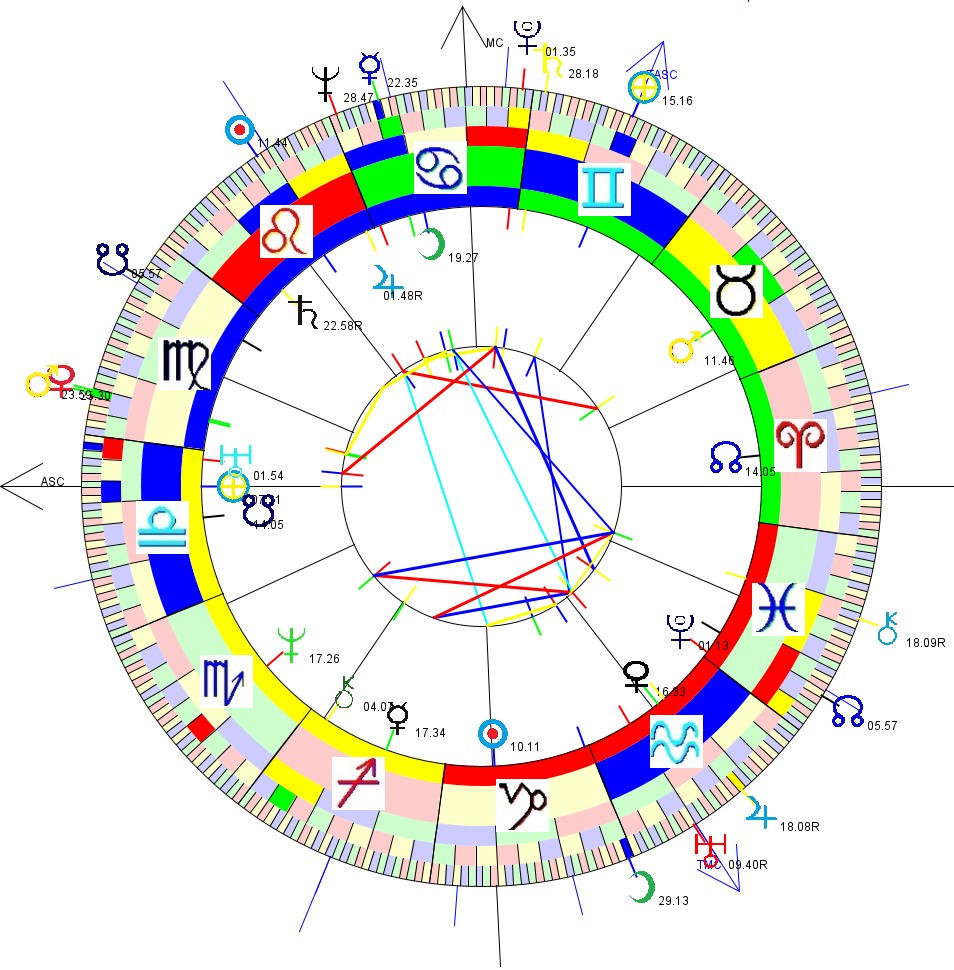
The transits at the time of World War I's start for Britain were
- Transiting Earth trine Britain's Venus
- Transiting Sun square Britain's Mars

- Transiting Jupiter sextile Britain's Mercury
- Transiting Jupiter conjunct Britain's Venus
- Transiting Jupiter square Britain's Neptune
- Transiting Chiron trine Britain's Moon
- Transiting Chiron square Britain's Mercury
- Transiting Chiron trine Britain's Neptune
- Transiting Pluto square Britain's Uranus
- Transiting Pluto trine Britain's Pluto
The chart shown is Britain's chart for the Act of Union, together with transits for the start of World War I around the outside. Aspect lines [traditional] are between the transits and the union chart.
End of World War I
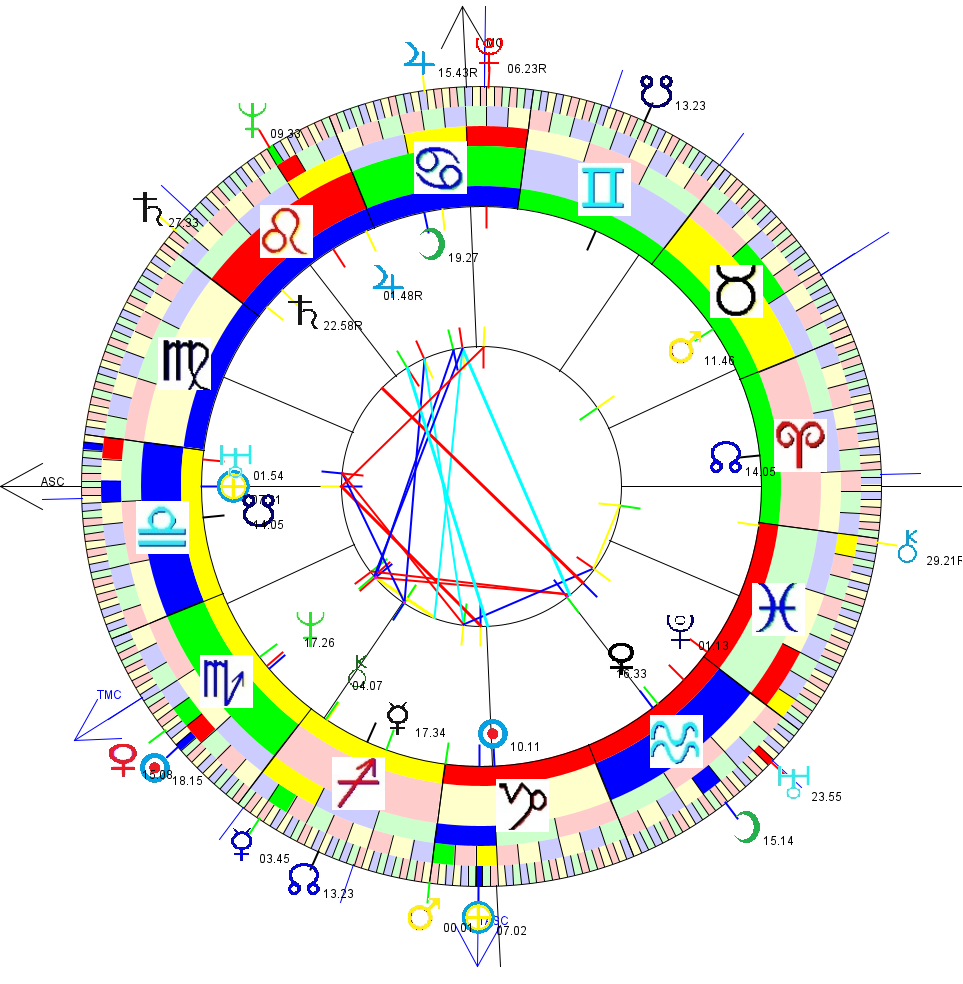
The transits at the time of World War I's end for Britain were
- Transiting Earth square Britain's Earth
- Transiting Sun trine Britain's Moon
- Transiting Sun square Britain's Venus
- Transiting Sun conjunct Britain's Neptune
- Transiting Moon conjunct Britain's Venus
- Transiting Mercury trine Britain's Jupiter
- Transiting Mercury sextile Britain's Uranus
- Transiting Mercury conjunct Britain's Chiron
- Transiting Venus square Britain's Venus
- Transiting Mars square Britain's Uranus
- Transiting Mars sextile Britain's Pluto
- Transiting Jupiter trine Britain's Neptune
- Transiting Uranus opposite Britain's Saturn
- Transiting Pluto square Britain's Earth
The chart shown is Britain's chart for the Act of Union, together with transits for the end of World War I around the outside. Aspect lines [traditional] are between the transits and the union chart.
World War II's background
World War II was a
What makes World War II such a great example?
Start of World War II
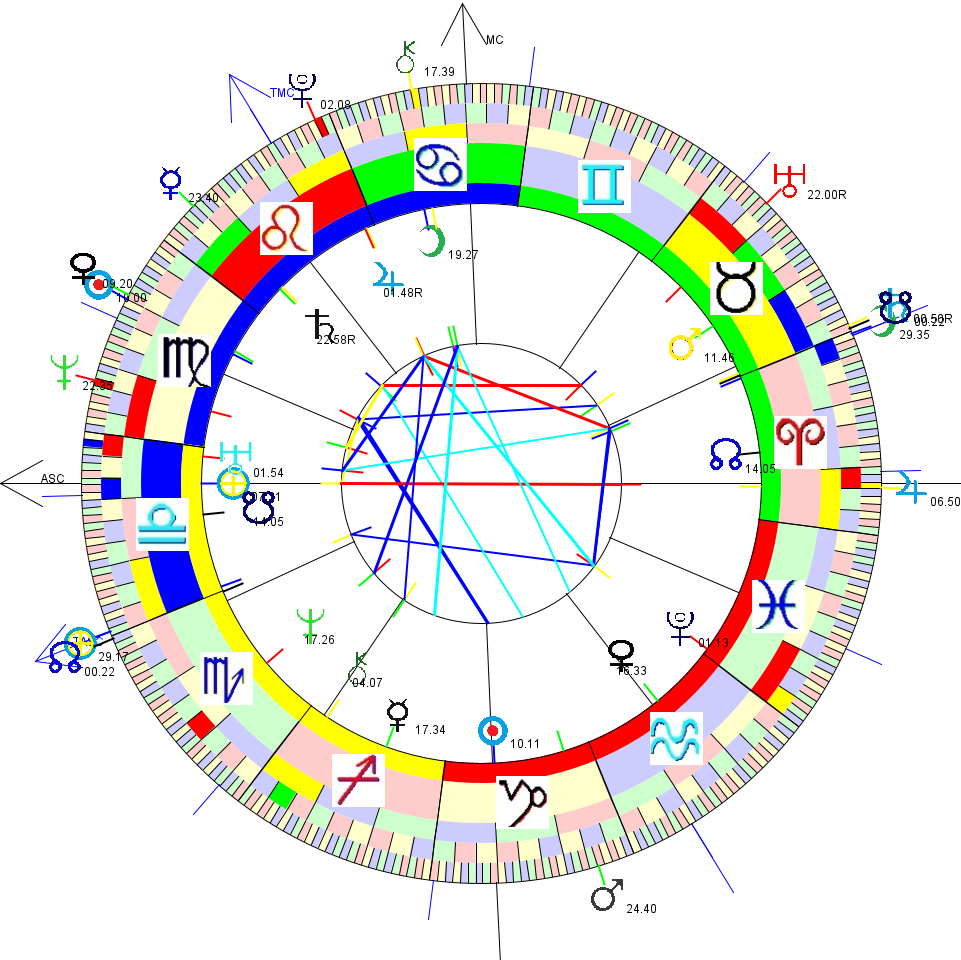
The transits at the time of World War II's start for Britain were
- Transiting Earth trine Britain's Pluto
- Transiting Sun trine Britain's Sun
- Transiting Sun trine Britain's Mars
- Transiting Moon sextile Britain's Pluto
- Transiting Mercury conjunct Britain's Saturn
- Transiting Venus trine Britain's Sun
- Transiting Jupiter opposite Britain's Earth
- Transiting Saturn square Britain's Jupiter
- Transiting Saturn sextile Britain's Pluto
- Transiting Chiron conjunct Britain's Moon
- Transiting Chiron trine Britain's Neptune
- Transiting Uranus square Britain's Saturn
- Transiting Pluto conjunct Britain's Jupiter
- Transiting Pluto sextile Britain's Uranus
- Transiting Pluto trine Britain's Chiron
The chart shown is Britain's chart for the Act of Union, together with transits for the start of World War II around the outside. Aspect lines [traditional] are between the transits and the union chart.
End of World War II
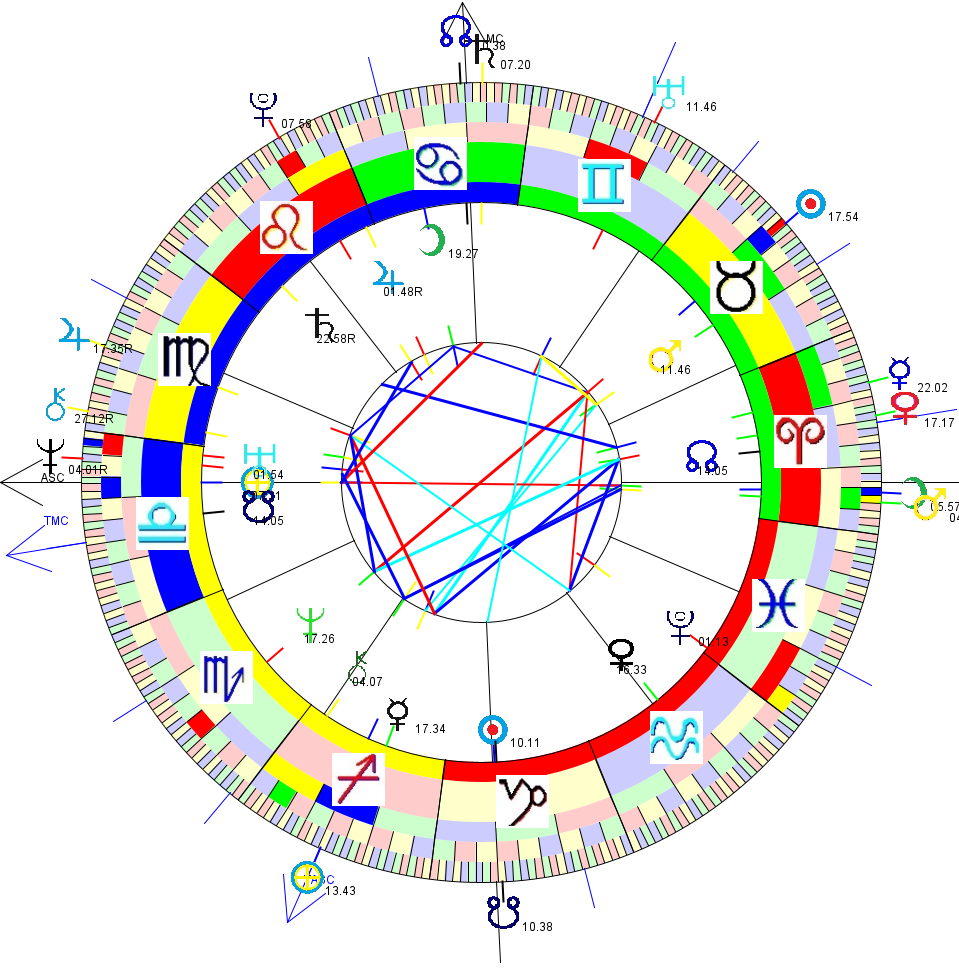
The transits at the time of World War II's end for Britain were
- Transiting Sun sextile Britain's Moon
- Transiting Sun square Britain's Venus
- Transiting Sun opposite Britain's Neptune
- Transiting Moon opposite Britain's Earth
- Transiting Moon trine Britain's Chiron
- Transiting Mercury trine Britain's Saturn
- Transiting Venus trine Britain's Mercury
- Transiting Venus sextile Britain's Venus
- Transiting Mars trine Britain's Chiron
- Transiting Jupiter sextile Britain's Moon
- Transiting Jupiter square Britain's Mercury
- Transiting Jupiter sextile Britain's Neptune
- Transiting Saturn square Britain's Earth
- Transiting Neptune sextile Britain's Chiron
- Transiting Pluto sextile Britain's Earth
The chart shown is Britain's chart for the Act of Union, together with transits for the start of World War II around the outside. Aspect lines [traditional] are between the transits and the union chart.

Leave a Comment
Thank you!
Your comment has been submitted and is awaiting moderation.
Comments
No comments yet.
 Go Home
 To encourage the rapid completion of this content, please feel free to donate on
Patreon
To encourage the rapid completion of this content, please feel free to donate on
Patreon This page is /menu/examples/soldiers/worldwar.php and it was last updated on Thursday 13th of November 2025 11:31:28 AM